Curriculum
Our vision is “For our students to be successful and confident learners with high levels of numeracy, literacy and wellbeing, through innovative and collaborative teaching.”
Quality teaching and learning at St Agnes ensures that curriculum is delivered to meet the differentiated needs of all learners and provides challenges and support to shape the learning of each individual. The school is committed to supporting students to become autonomous learners and successful citizens.
The Australian Curriculum guides teaching and learning programs through the 8 learning areas of the Australian Curriculum
https://v9.australiancurriculum.edu.au/
Parents are provided with a class newsletter each term which includes a term overview outlining the class teaching and learning program.
Visit curriculum in South Australia for more information.
Site Learning Focus
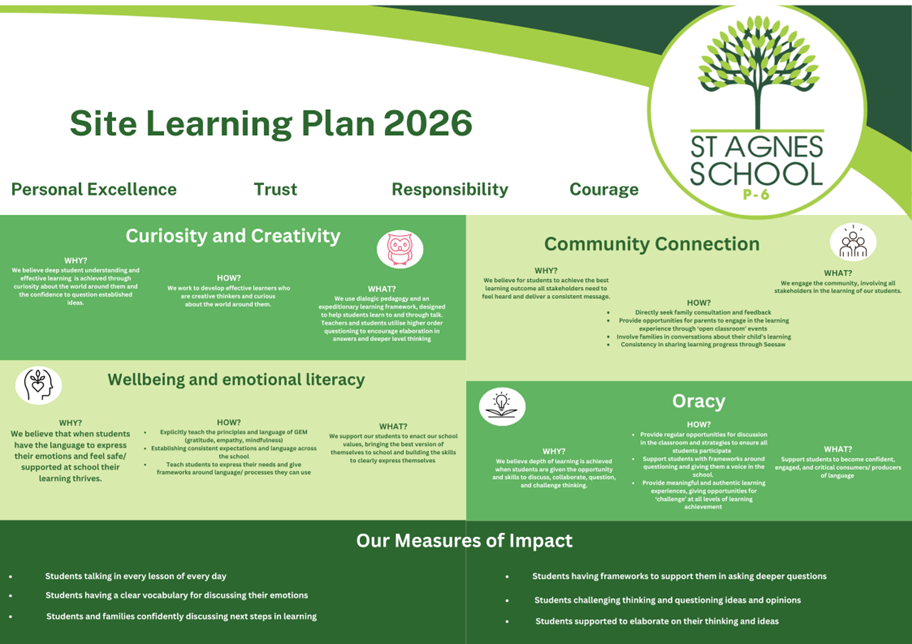
At St Agnes we place a strong emphasis on educating the ‘entire child’. As you can see from our current focus areas we are working to build the creativity and curiosity of our students to help them become the most effective learners that they can be. We are doing this through developing student ‘oracy’ skills/ their ability to communicate effectively and ask questions of each other/ the teacher in order to deepen their understandings of a topic
Reading and Literacy Instruction at St Agnes
At St Agnes we have a strong structured synthetic phonics program for all of our students and work really hard to target learning at the specific needs of our students.
In the Reception – Year 2 space we use the InitiaLit program which is a researched based scope and sequence of learning designed to build student understanding of the 42 sounds in the English language and ensure they are becoming fluent readers.
In year 3-6 we use a scope and sequence for spelling and morphology designed by the Department’s Literacy Guarantee Unit to fill in any gaps that exist in student understanding and then help them to build a deeper understanding of the English Language and ensure they become the highly literate students/ adults we all want them to be. in 2026 our year 3 to year 6 classes have been providing extra targeted support by gathering assessment information and making observations of students at the beginning of the year and then organising spelling/ phonics groups based on specific needs and ensuring students are placed with peers who are working on the same goals.
Assessment Programs
We use a range of different assessment programs to help us understand where students are at in terms of their understandings and help us to know how to support them further. These include the standardised NAPLaN and Progressive Achievement Testing (PAT) programs as well as a range of others to monitor progress throughout they year.
DIBELS Testing
Our staff in years 2-6 use the DIBELS assessments to track student reading progress. There are 2 different tests that are completed 3 times a year in mid term 1, mid term 3, and mid term 4. These assessments called, Oral Reading Fluency (ORF) and MAZE, track student fluency and their comprehension of information. Information about progress in these tests is shared with families at different points in the year.
Intervention Programs
Sometimes students have gaps in their learning and require a little bit of extra support to help them achieve the standard of learning that we want all of our students working towards.
We are committed to a strong reading and spelling intervention program, delivered by support staff and targeted instruction delivered by teaching staff to make sure that all students get the help that they need. Our intervention program has been developed by the Department’s Literacy Guarantee Unit and is highly targeted for our students. If your child is part of the intervention program you will receive information from the school as well as updates throughout the year in regards to their progress.
Extra Curricula Offerings
We offer many different opportunities for students to participate in learning beyond the usual classroom environment including the following
- Kitchen Lessons – twice a term classes work in our fully functioning kitchen to cook different recipes and work together to learn about different cultures, types of food etc.
- Garden Lessons – Students work with staff to plant, maintain, and pick fruits, vegetables, and herbs that they are then able to use in our kitchen lessons whilst also learning about sustainability and caring for our country
- SAPSASA – More information can be found on the ‘specialist programs’ page
- School Camps – We have a bi-annual 2 night camp for our year 5/6 students giving students opportunities to build teamwork and collaboration skills as well as developing resilience in being away from family. On alternate years the school organises either a one night retreat or a day for students to still build these skills.
- Choir – each year we have a large group of year 5/6 students participate in the festival of music choir program